2024 is rapidly approaching and I have found myself reminiscing over some of the adventures I’ve been on this year. 2023 has been a year full of challenges, both personal and professional, as I continue to aim for my goals. As well as visiting local heritage, I’m happy to say that my adventures in the world of museum inspecting took on an international scope with visits to cities in both Italy and Romania. I’ve had the opportunity to expand my knowledge of different cultures and histories. Furthermore, one museum inspector became two and I’ve been overjoyed to share my passion with my partner. Below is a list of some of the standouts from this year.
Kedleston Hall – Derbyshire, England
Built between 1759 – 1765 by Nathaniel Curzon, 1st Baron Scarsdale (b.1726 – d.1804) and following the designs of architect Robert Adam (b.1728 – d.1992), the hall is an ode to Greek and Roman style. Whilst the Curzon family had their own private living quarters within the house, certain rooms were built for the purpose of impressing visitors and were not actually lived in. These rooms have been preserved for audiences to visit today. The first is the Marble Hall which was designed to imitate the classical style of ancient Rome. It’s impressive to behold, containing twenty Corinthian columns along with casts of classical statues. Another room of note is the Saloon. Completed in 1963, it’s domed ceiling is reminiscent of the Pantheon in Rome. The walls are decorated with grisaille panels painted by John Biagio Rebecca (b?-d. 1847) which depict scenes of British worthies. Additionally as visitors journey around the rooms they will note Curzon’s love of symmetry which is particularly noticeable in the drawing room.

The Hall also houses the Eastern Museum. Created in the 1920’s, it displays one of the largest collections of Asian artifacts in the midlands. These objects came into the possession of the family in the late 19th century, due to Lord George Curzon’s (b.1859 – d.1925) position as Viceroy of India. The collection mainly comes from Lord Curzon’s tours of Asia in 1887,1890 and 1894 but also holds a variety of artifacts of Islamic and Indo-Islamic origin. Current projects supported by the National Trust aim to broaden understandings of these objects through specialist research as well as examine and confront legacies of colonialism.
Kenilworth Castle – Warwickshire, England
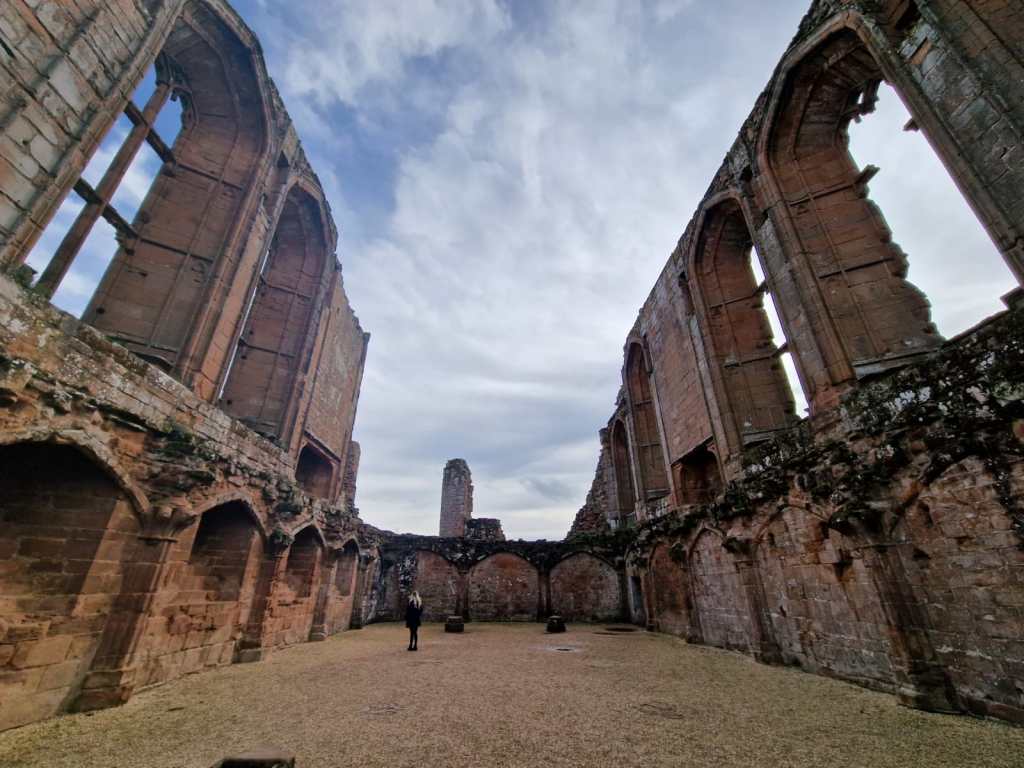
Founded in the 12th century around a Norman Great Tower, in the town of Kenilworth, the castle was developed by its various owners over hundreds of years. Visitors can trace the many layers of history through exploring the ruins such as the keep which originally built in the 12th century and the Great Hall, which was built in the 14th Century. But many of the castle’s further alterations can be attributed to one of its most intriguing owners. Robert Dudley, 1st Earl of Leicester (b.1532 – d.1588), made many renovations, in order to impress Queen Elizabeth I (b.1533 – d.1603). She visited four times, with her final visit in 1575 lasting for an impressive 19 days. What remains of her private rooms can be explored via platforms that ascend 18 meters up into the towers.
Our favourite part was the Elizabethan Gardens which have been recreated to resemble what they would have looked like during Queen Elizabeth I’s progress. Surrounded by an array of flowers and herbs, is the marble Atlas fountain, carved with scenes from the Roman poet Ovid’s (43BC – 17/18 AD) most well-known work ‘Metamorphoses’,. The garden can be viewed, in all its splendour, from the terrace. For more on Kenilworth Castle, please visit my article on Mainly Museums
The Borghese Gallery – Rome, Italy
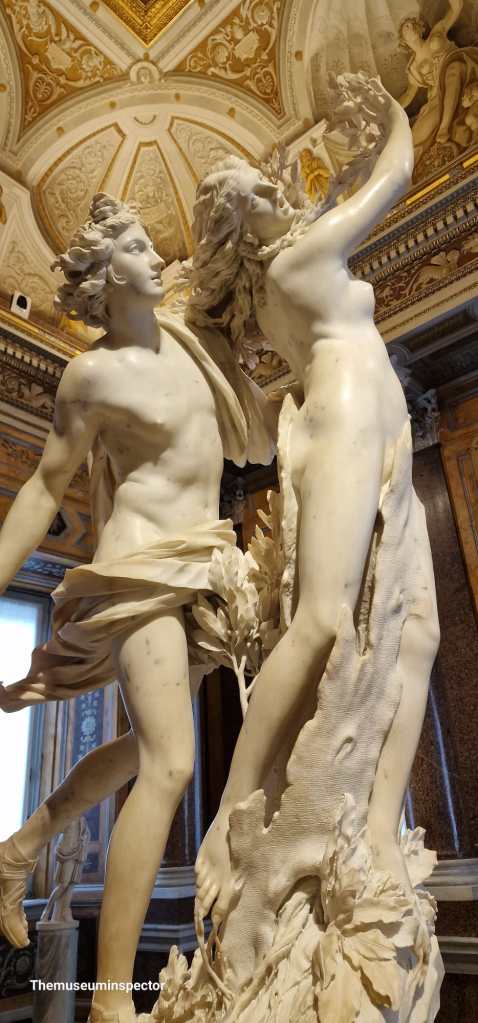
Situated in the Villa Borghese Gardens is the Borghese Gallery. Constructed for the use of Cardinal Scipione Borghese (b.1577 – d.1633), nephew of Pope Paul V (b.1550 – d.1621), it contains a large proportion of artworks and sculpture owned by the family. By walking through the rooms, visitors can trace the development of artistic styles from the Medieval period to the Renaissance and then onwards into the 18th and 19th centuries. The cardinal was also a patron of Baroque sculptor Bernini (b.1598 – d.1680) with the museum housing what many consider to be his crowning achievements in sculpture. Aeneas, Anchises, and Ascanius Fleeing Troy (1618/19), Rape of Proserpina (1621/22), Apollo and Daphne (1622), and David (1623/24) are the defining artworks of his career and are magical to look at.
The Palace of Culture- Iași, Romania
The Palace of Culture is an impressive neo-gothic building in the heart of Iași, Romania. It is currently the site of the Moldova National Museum Complex. Incredibly it is home to not just one museum but four! These are the Art Museum, Moldova’s History Museum, Ethnographic Museum of Moldova, and the Science and Technology Museum dedicated to physicist Ștefan Procopiu (b.1890 – d.1972). These museums explore the history of the historic principality of Western Moldova which existed from the 14th century to 1859, before it united with Wallachia and formed Romania. It’s easy to spend a whole day here exploring the collections and admiring the architectural beauty of the space. I have written an in-depth article about my experience for Mainly Museums, if you would like to read it please visit their wonderful site!

Conclusion
It was difficult to pick just four highlights. Every historic house, museum, and castle we’ve visited this year is worthy of a mention. They offer us glimpses into an enriching history and allow us to analyse our relationship with the past. They also encourage us to explore, diversify and enrich our knowledge and will always be pivotal in our learning. Going into 2024, The Museum Inspector will continue to support these cultural institutions.
 The Museum Inspector
Leave a comment