Venice holds a lot of happy memories for me. It will always be the special place where, amongst Renaissance masterpieces and centuries old books, my partner got down on one knee and proposed. Whilst this blog has been a platform to share my cultural interests, I would also like to share some more personal news that – following on from my partners proposal – we are now married! Whilst my blog started off with only me, it has become a joint project that myself and my husband work on together. My husband assists me on behind the scenes work as well as supplying beautiful photos for my articles. It’s fabulous to be able to share our passion for heritage and, after a very hectic but happy year, I have finally completed part two of the article on my weekend in Venice. Following on from last time, this article focuses on the Ca’ Pesaro (The Museum of Modern Art) and Ca’ Rezzonico – the 18th Century Museum of Venice.
Ca’ Pesaro (The Museum of Modern Art)
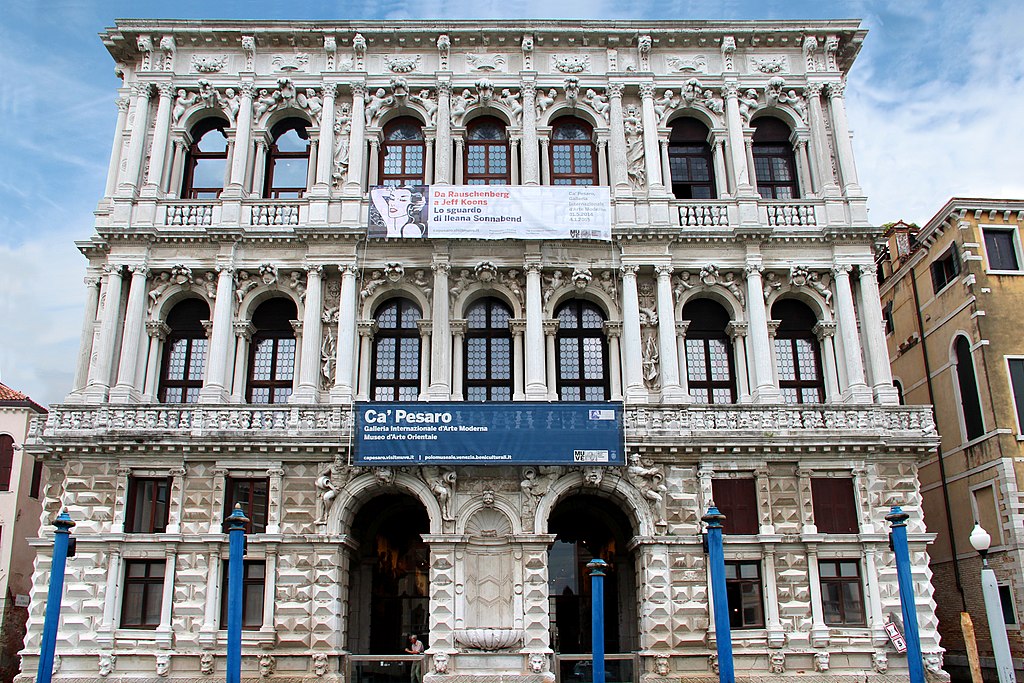
Whilst this beautiful building has housed the city’s modern art collection since 1902, the space itself was built (as the name suggests) by the Pesaro family in the 17th century. Designed by baroque architect Baldassarre Longhena (b.1598 – d.1682), construction began in 1659 but remained unfinished on Longhena’s death. It stood unfinished until 1710. On completion, the Pesaro family waisted no time, lavishly decorating the walls of the house with the works of Renaissance masters Bellini, Titian and Vivarini to name a few. The collection they amassed through generations was vast and opulent, however upon the death of the last Pesaro family member in 1830, much of the collection was auctioned off. A lot of the artworks which once adorned their walls were sold to the city of London.
After passing through several owners, the palace ended up in the hands of Duchess Felicita Bevilacqua La Masa (b.1822 – d.1899) who donated it to the city in 1898 ‘for the benefit of young artists in particular, who [were] often barred from participating in large exhibitions.’[1] With this, Ca’ Pesaro became the permanent home of the Museum of Modern Art. In 1907 the museum found itself under the direction of Nino Barbantini (b.1884 – d.1952) a man who, whilst originally studying law, decided that his future lay in the facilitation of art. As director of the museum, he supported a younger generation of experimental artists by continuing the work of the Duchess and creating the Bevilacqua La Masa Exhibitions to showcase their work. These exhibitions ran between 1908 and 1924.
Over the years, the museum has acquired many international pieces from the likes of Andy Warhol (b.1928 – d.1987) and Gustav Klimt (b.1862-d.1918) but still prioritises its local art heritage. I enjoyed getting to know about some of the trailblazers in Italy’s modern art movement. Two favourites of mine were Vittorio Zecchin (b.1878 – d.1947) and Armando Pizzinato (b. 1910 – d. 2004).
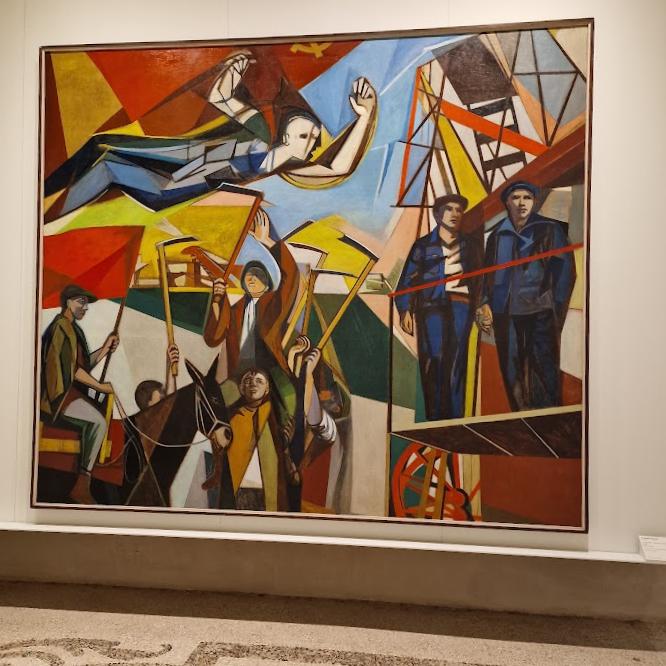
The layout itself takes you through the development of art movements such as Cubism and Dadaism chronologically. The artwork is also presented in a way that does not overwhelm the viewer. There is plenty of space to browse. Whilst some might hear the term ‘Modern Art’ and think of work that is inaccessible, this museum does an excellent job of having something for everyone and I guarantee that there will be something to grab your interest within the museum walls.
Cà Rezzonico – Museum of 18th Century Venice
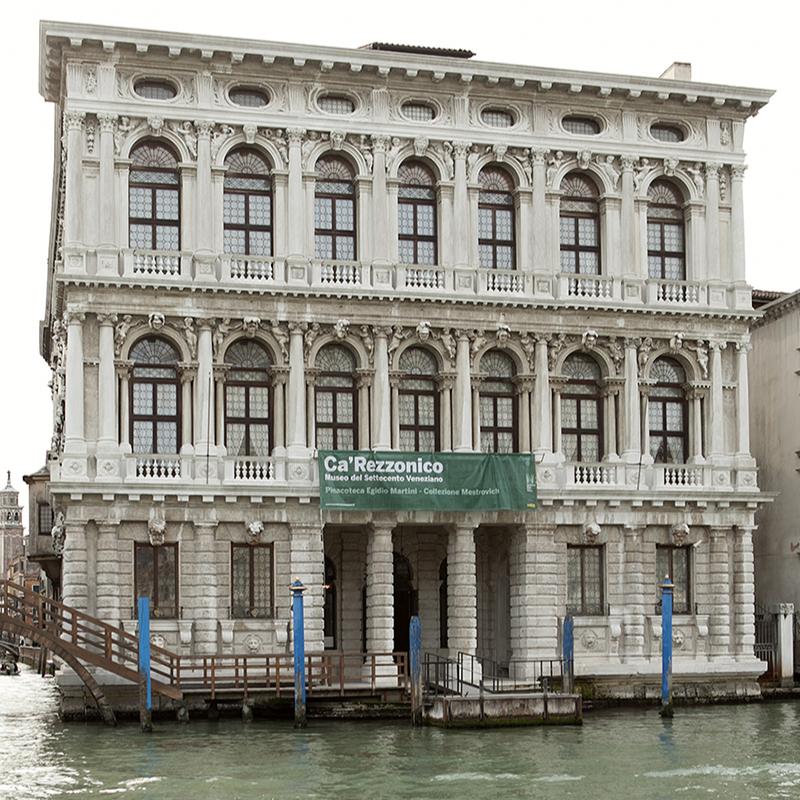
Though it was designed by the same architect as the Ca’ Pesaro, the creation of the Ca’ Rezzonico did not run quite as smoothly. Commissioned by Procurator Filippo Bon, in the mid-17th century, construction abruptly stopped upon the death of Longhena due to a lack of funds. The house remained unfinished until Giambattista Rezzonico, whose family had just been elevated into the noblesse, bought the building. He commissioned architect Giorgo Massari (b.1687 – d.1766) to finish what the Bon family had started. However, more bad luck would befall the owners of the house as in 1810 the family name died out due to a lack of male heirs. After this, Ca’ Rezzonico was passed through a long list of different owners, at one point falling into the hands of British painter Robert Browning (b.1849 – d.1912). His father of the same name took up residency at the house and actually died there in 1889.
The house was finally sold to the Venice Town Council in 1935. The Museum was subsequently founded a year later, though the new owners found that it had been stripped of all of it’s original furnishings. The missing furniture and artworks were replaced by items from other civic owned museums or purchased through private sellers. The designers of the museum, Nino Barbantini (b.1884 – d.1952) and Giulio Lorenzetti (b.1885 – d.1951) passed off these new purchases as the original furnishings of the building. Their collection formed the nucleus of the museum which has been added to and re-worked in the intervening years, the result being a wonderful time capsule of the 18th century.
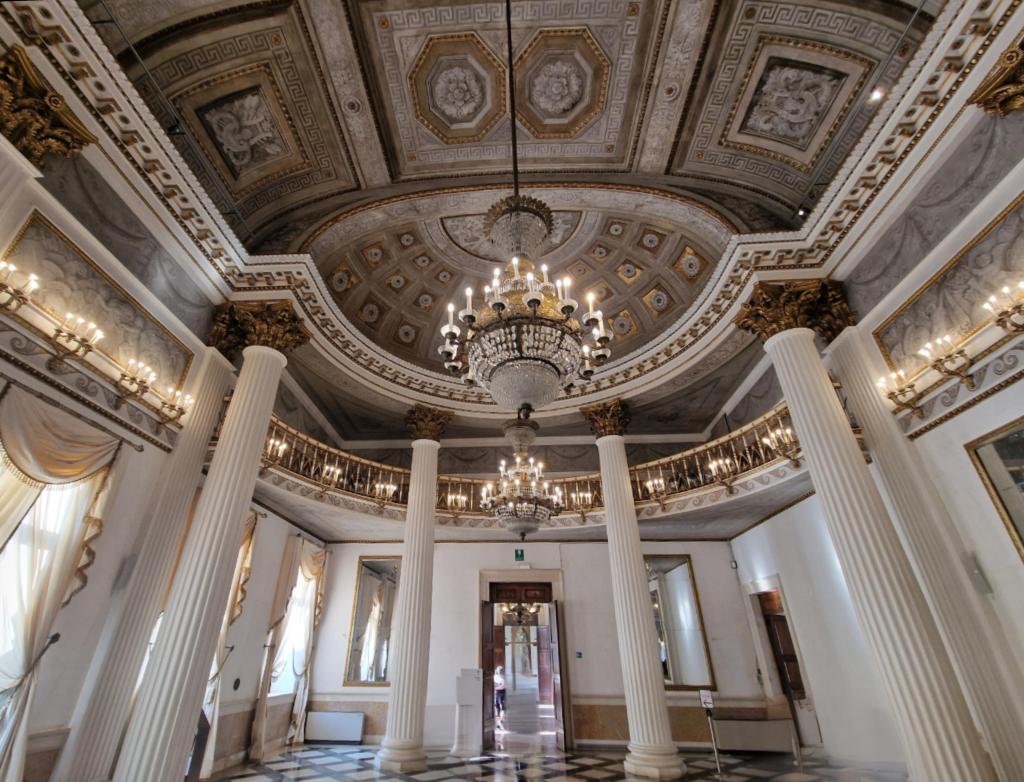
A highlight for me was the ballroom, painted using the Trompe L’oeil technique. Meaning ‘to trick the eye’ this was a common painting style used during the Baroque period. This involved painting two dimensional surfaces to give the illusion that they were actually three dimensional. Many rooms in the museum use this technique, but I think that the ballroom is one of the finest examples and brings the paintings of Apollonian myths on its walls and ceiling to life. The ballroom marks the start of a journey through the opulence of the 18th century complete with breath-taking frescoes, paintings and furnishings.
Conclusion
Italy itself is a treasure trove of heritage, though every city leaves their own unique historical stamp I enjoyed learning about that of Venice. Furthermore, as well as enriching my knowledge on international artists I have also found new artists to love.
If you would like to follow more of my museum related adventures find me on Tiktok and Instagram!
Sources
City of Venice, Bevilacqua La Masa Foundation, <Bevilacqua La Masa Foundation – San Marco Gallery | Events – Venezia Unica >
Fondazione Musei Civici de Venezia, Ca’ Rezzonico, < Building and history | Ca’ Rezzonico>
Fandazione Musei Civici Venzia, Ca’ Pesaro, < Building and history – Ca’ Pesaro>
The Fondazione Giorgio Cini, Nino Barantini, < Nino Barbantini – Fondazione Giorgio Cini Onlus >
Please Note: The lack of birth and death dates for some individuals mentioned in this article is down to there being no record.
[1] City of Venice, Bevilacqua La Masa Foundation, <Bevilacqua La Masa Foundation – San Marco Gallery | Events – Venezia Unica > [Accessed 22nd June 2024]
 The Museum Inspector
Leave a comment